


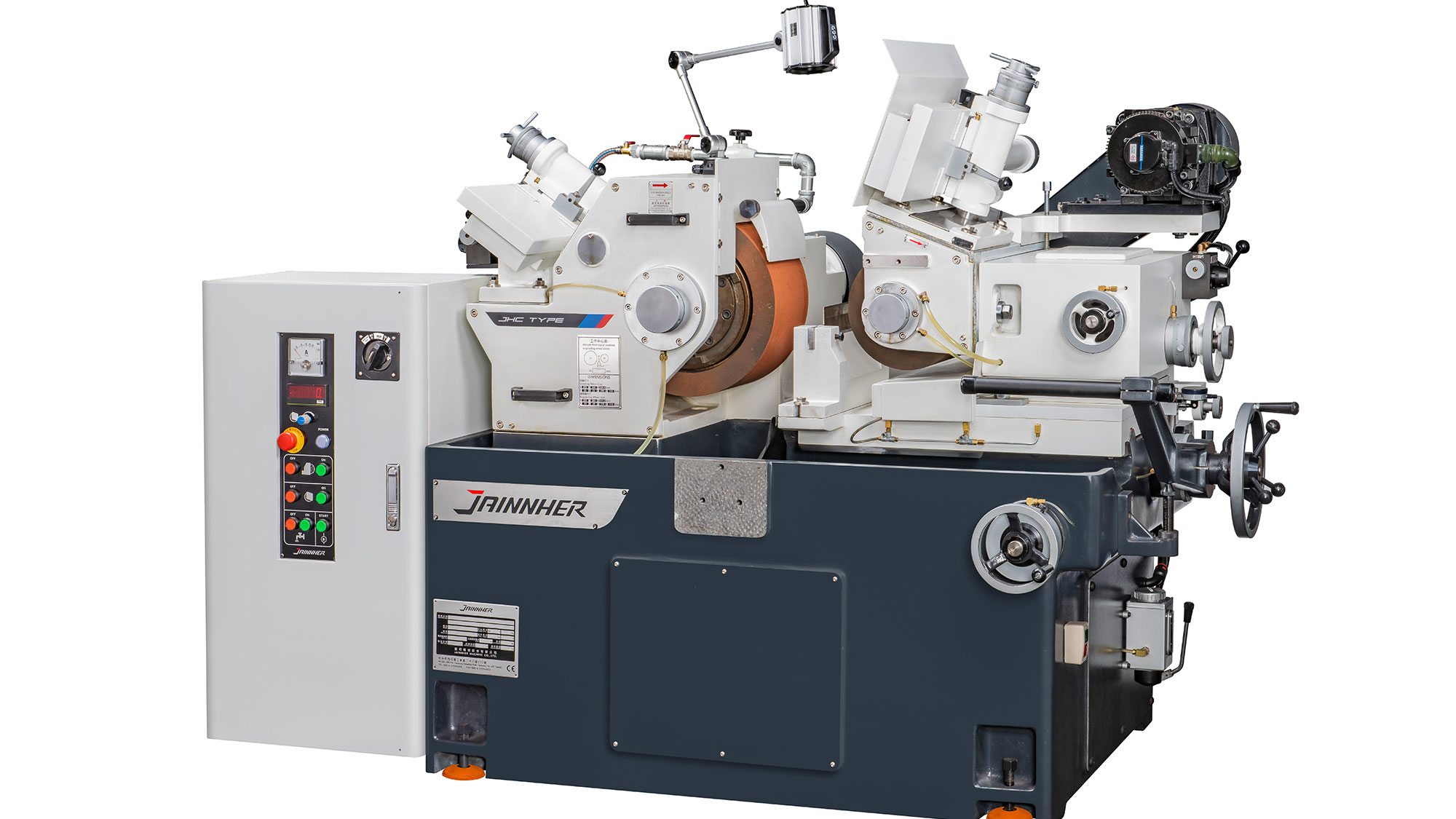
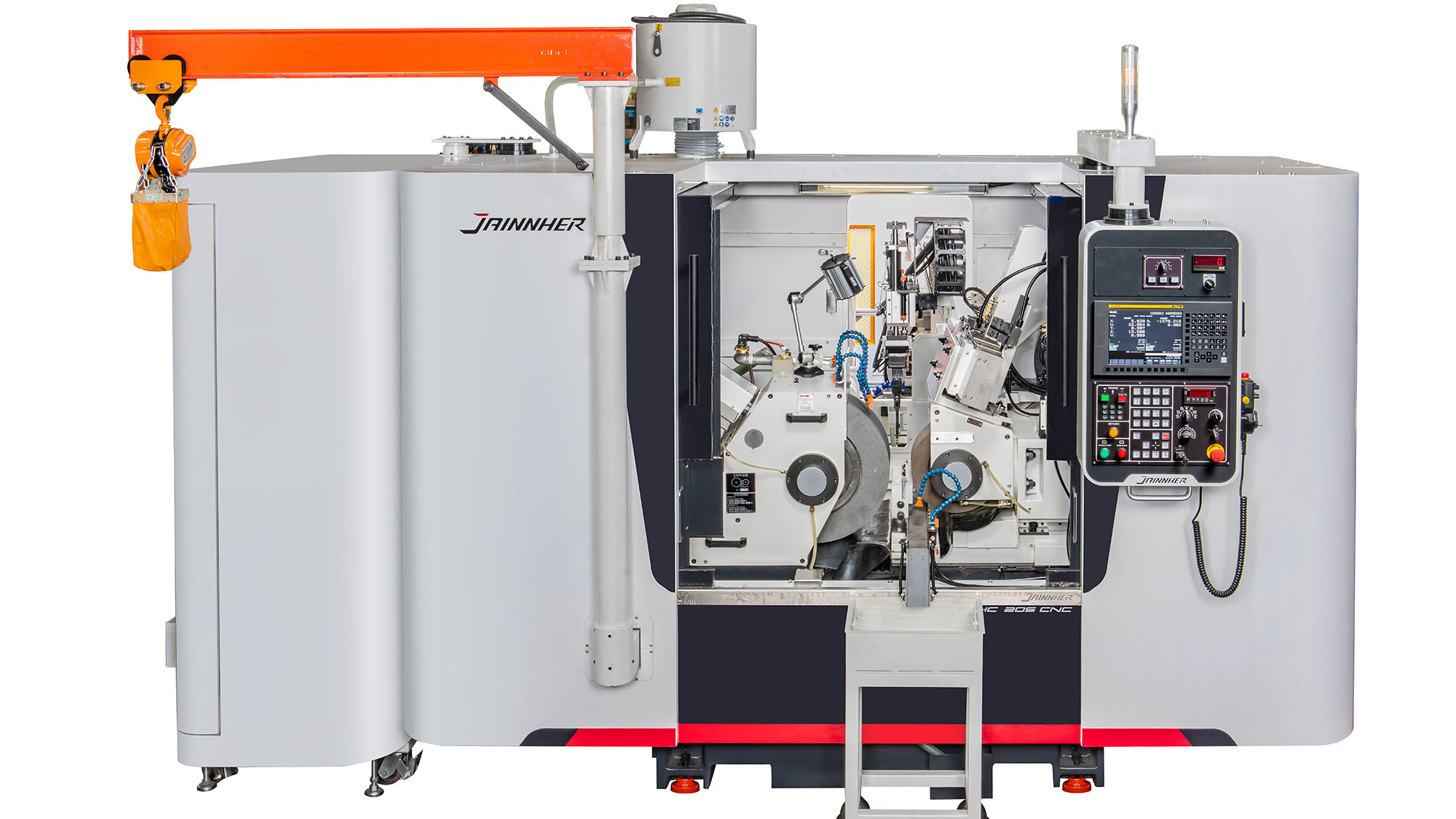
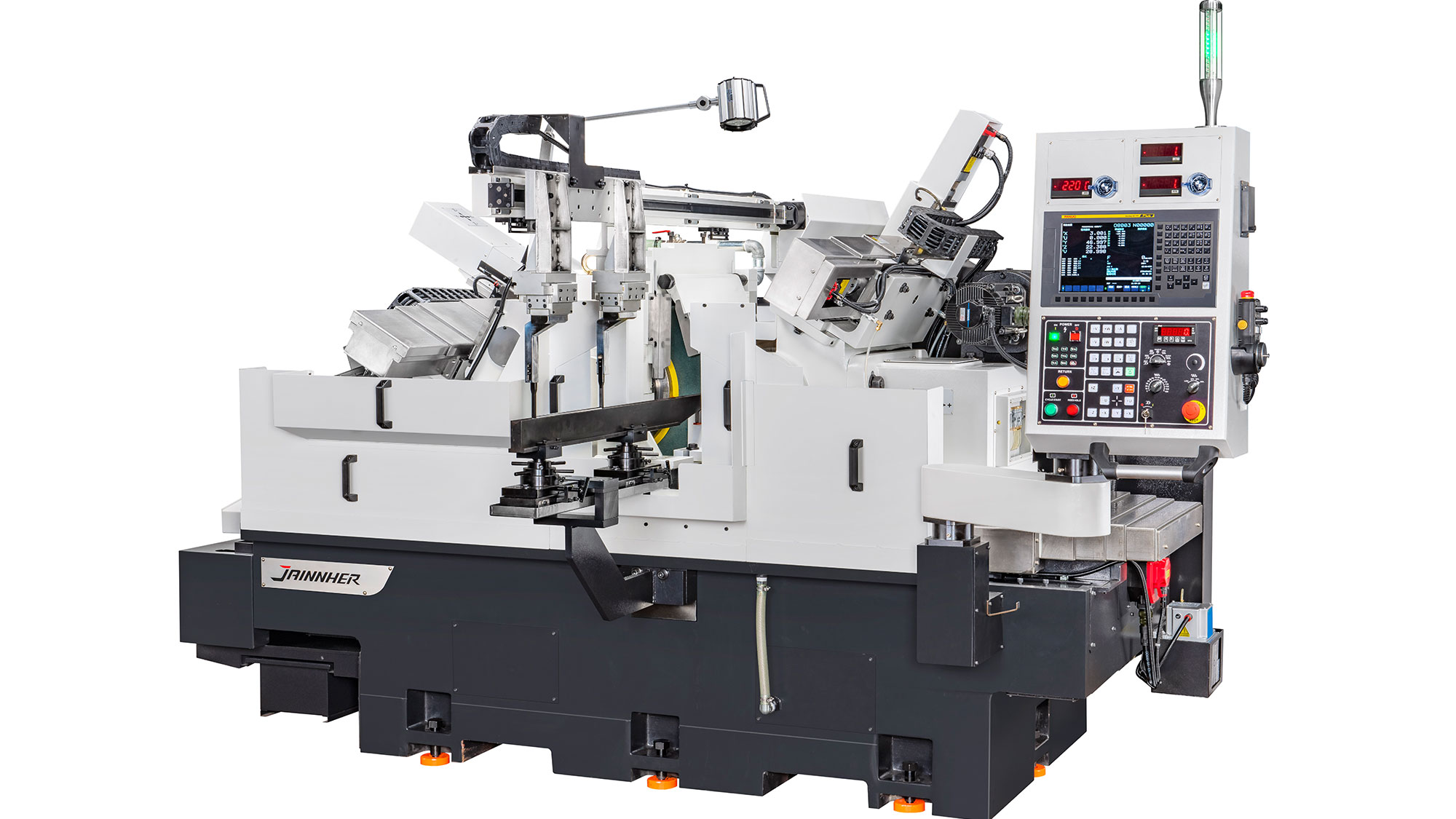
JAINNHER JHC Series Centreless Grinding machines
Technical specification
| Category | Grinders |
| Model | JHC-12 Series, JHC-18 Series, JHC-20 Series, JHC-24 Series, JHC-24T Series |
| Condition | Used |
| Location | United Kingdom |
| Condition | New |
| Model | JHC-12 Series, JHC-18 Series, JHC-20 Series, JHC-24 Series, JHC-24T Series |
| Grinding wheel size | 305 x 150 x 120mm, 455 x 205-305 x 228.6mm, 510 x 205 x 254mm, 610 x 205-305 x 304.8mm, 610 x 205-610 x 304.8mm |
| Standard work rest dia capacity | 1 - 25mm Ø, 1 - 50mm Ø, 2 - 60mm Ø, 2 - 230mm Ø |
| Special work rest dia capacity | 25 - 40mm Ø, 40 - 100mm Ø, 50 - 150mm Ø, 2 - 230mm Ø |
| Regulating wheel size | 205 x 150 x 90mm, 255 x 205-305 x 111.2mm, 305 x 205 x 127mm, 305 x 205-305 x 127mm, 405 x 610 x 254mm |
| Spindle motor (grinding wheel) | 7.5Hp, 15 / 20Hp, 20Hp, 25 / 30Hp, 40 / 60Hp |
| Machine weight | 1600 - 1750kg, 2800 - 300kg, 3200 - 3500kg, 7000 - 7500kg, 9250 - 10550kg |
| Machine execution | Manual, PLC or CNC |
Description
For over 35 years, RK International has supplied and supported a range of JAINNHER JHC Centreless Grinding Machines.
With grinding capacities of up to 230mm diameter, the JHC series can be configured in:
Manual, conventional configuration,
Semi-Automatic with NC control and
CNC control with FANUC control.
Up to 8 axes machines with one of the widest ranges of loading and unloading systems are available from bowl feeding, gantry loading to robot systems. Measuring systems can also be configured for new levels in centreless grinding productivity.
See the Latest news: >>> https://www.rk-int.com/news/diamond-grinding-solution-for-carbide/
Some FAQ’s:
#sp-ea-89528 .spcollapsing{height: 0; overflow: hidden; transition-property: height; transition-duration: 350ms;}#sp-ea-89528.sp-easy-accordion>.sp-ea-single.eap_inactive>.ea-header a {background-color: #bb0000 !important; color: #fff !important;}#poststuff .eap_section_title_89528,.post-type-sp_easy_accordion .eap_section_title_89528,.eap_section_title_89528{color: #444444; font-size: 28px; line-height: 32px; text-align: left; letter-spacing: 0px; text-transform: none; margin-bottom: 30px; padding:0px;}#sp-ea-89528.sp-easy-accordion>.sp-ea-single{ margin-bottom: 10px; border: 1px solid #001f43; border-radius: 1px;}#sp-ea-89528.sp-easy-accordion>.sp-ea-single.ea-expand{ border-color: #35b8e3;}#sp-ea-89528.sp-easy-accordion>.sp-ea-single:hover{ border-color: #35b8e3;}#sp-ea-89528.sp-easy-accordion>.sp-ea-single>.ea-header a {background: #eee;}#sp-ea-89528.sp-easy-accordion>.sp-ea-single.ea-expand>.ea-header a {background: #eee;}#sp-ea-89528.sp-easy-accordion>.sp-ea-single>.ea-header:hover a {background: #eee;}#sp-ea-89528.sp-easy-accordion>.sp-ea-single>.ea-header a .eap-title-icon { color: #444;font-size: 20px;} #sp-ea-89528.sp-easy-accordion>.sp-ea-single>.ea-header a .eap-title-custom-icon {max-width: 20px;}#sp-ea-89528.sp-easy-accordion>.sp-ea-single>.ea-header:hover a .eap-title-icon {color: #444;}#sp-ea-89528.sp-easy-accordion>.sp-ea-single.ea-expand>.ea-header a .eap-title-icon {color: #444;}#sp-ea-89528.sp-easy-accordion>.sp-ea-single>.ea-header a {padding: 15px 15px 15px 15px; color: #444; font-size: 20px; line-height: 30px; text-align: left; letter-spacing: 0px; text-transform: none;}#sp-ea-89528.sp-easy-accordion>.sp-ea-single>.ea-header:hover a {color: #444;}#sp-ea-89528.sp-easy-accordion>.sp-ea-single.ea-expand>.ea-header a {color: #444;}#sp-ea-89528.sp-easy-accordion>.sp-ea-single>.sp-collapse>.ea-body p,#sp-ea-89528.sp-easy-accordion>.sp-ea-single>.sp-collapse>.ea-body{background: #fff; padding: 15px 15px 15px 15px; border-radius: 0 0 1px 1px; color: #444; font-size: 16px; text-align: left; letter-spacing: 0px; line-height: 26px; animation-delay: 200ms; text-transform: none;}#sp-ea-89528.sp-easy-accordion>.sp-ea-single>.ea-header a .ea-expand-icon.fa:before {color: #444; font-size: 16px; font-style: normal;}#sp-ea-89528.sp-easy-accordion>.sp-ea-single>.ea-header:hover a .ea-expand-icon.fa:before {color: #444;}#sp-ea-89528.sp-easy-accordion>.sp-ea-single.ea-expand>.ea-header a .ea-expand-icon.fa:before {color: #444;}#sp-ea-89528.sp-easy-accordion>.sp-ea-single{border-radius: 1px; border: 1px solid #001f43;}#sp-ea-89528.sp-easy-accordion>.sp-ea-single>.sp-collapse>.ea-body{border-radius: 0 0 1px 1px; border: none;}#sp-ea-89528.sp-easy-accordion>.sp-ea-single>.ea-header a .ea-expand-icon.fa {float: left; margin-right: 10px;}#sp-ea-89528 #eap_faq_search_bar_container {display:none; opacity:0;}#sp-ea-89528 #eap_faq_search_bar_container span::before{content:"";}#sp-ea-89528.sp-easy-accordion>.sp-ea-single>.sp-collapse>.ea-body p{ padding:0px}#sp-eap-accordion-section-89528.sp-eap-container .sp-eap-infinite-scroll-loader,#sp-eap-accordion-section-89528.sp-eap-container div:is(.sp-eap-load-more,.sp-eap-ajax-number-pagination){text-align:center;}#sp-ea-89528>.sp-ea-single>.sp-collapse>.ea-body .eap-product-price {color: #444;}#sp-ea-89528.sp-easy-accordion>.sp-ea-single>.sp-collapse>.ea-body .eap-product-price del{color: rgba(68,68,68,0.71);}#sp-ea-89528.sp-easy-accordion>.sp-ea-single>.sp-collapse>.ea-body .eap-product-cart-button .woocommerce a { border: 1px solid #DAD6DA;border-radius: 2px;background-color: transparent;color: #444;}#sp-ea-89528.sp-easy-accordion>.sp-ea-single>.sp-collapse>.ea-body .eap-product-cart-button .woocommerce a:hover { border-color: #444;background-color: #444;color: #fff;}#sp-ea-89528.sp-easy-accordion>.sp-ea-single>>.sp-collapse>.ea-body .eap-product-cart-button .eap-product-quantity .eap_input_text {border: 1px solid #DAD6DA;}#sp-ea-89528.sp-easy-accordion>.sp-ea-single>.sp-collapse>.ea-body .eap-product-cart-button a.add_to_cart_button{position: relative;} Grinding Machines – Centreless Grinding
What is Centreless Grinding?
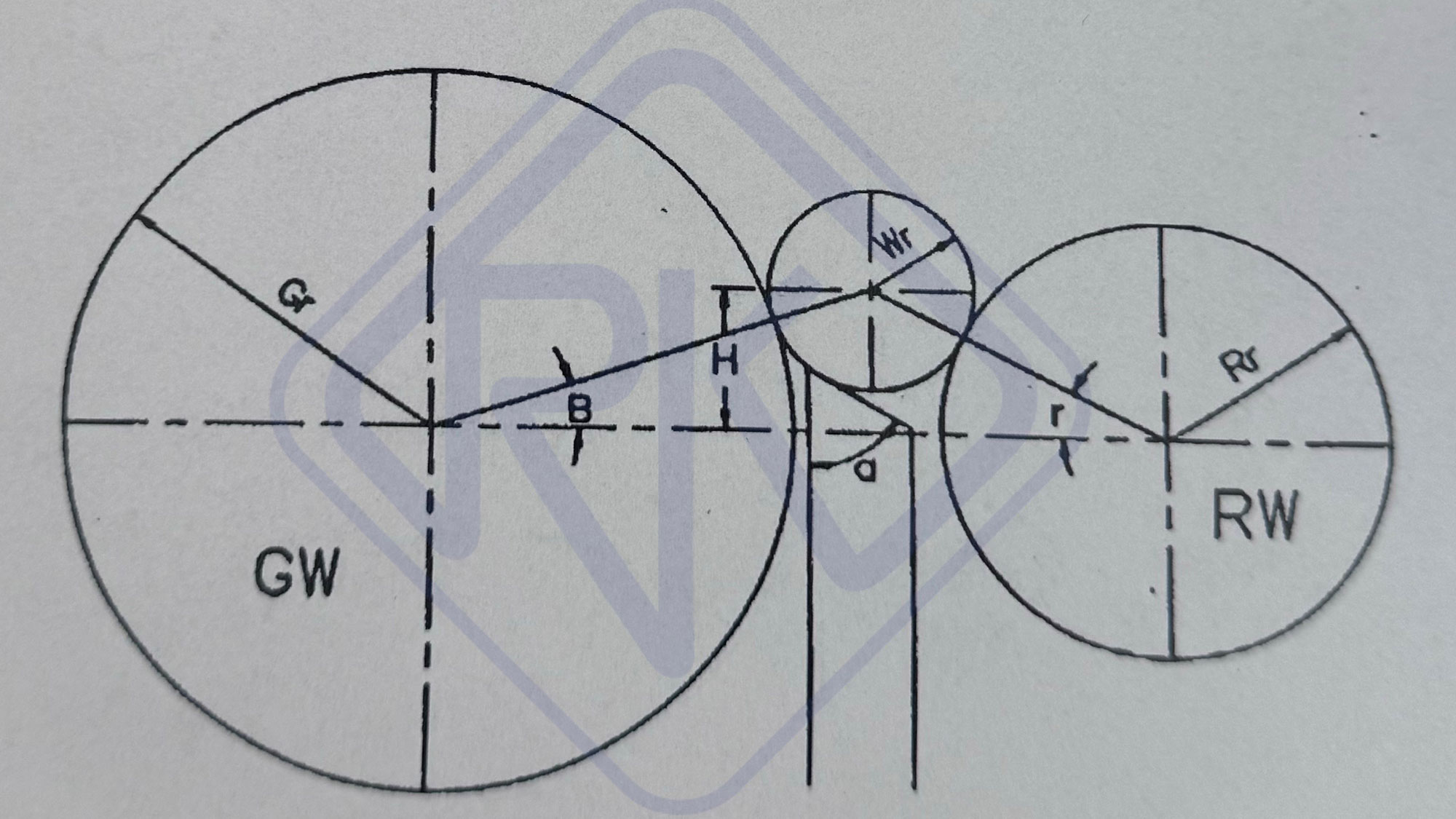
Centreless grinding is a precision machining process that removes material from the outer diameter of cylindrical workpieces without using centres or fixtures to hold the part in place. Unlike conventional cylindrical grinding, where the workpiece is secured between centres or in a chuck, in centreless grinding, the workpiece rests on a work blade. Two wheels guide it: a grinding wheel and a regulating wheel, also often referred to as a control wheel.
The grinding wheel rotates at high speed to remove material, while the regulating wheel rotates at a much slower speed to control the workpiece’s rotation and feed rate. Often, the regulating wheel is inclined to adjust the material feed rate.
The work blade provides support at the correct angle, creating a stable “grinding zone” for precision machining.
Visit the Centreless ( or Centerless) Grinding Machine Section : https://www.rk-int.com/product-category/grinding/centreless/
What are the advantages of centreless grinding?
Higher Productivity: Continuous loading allows for faster processing
Improved Roundness: The method naturally produces excellent concentricity
No Workpiece Distortion: No chuck or centre pressure means no deformation
Versatility: Can handle long, thin parts that would deflect in centred grinding
Consistency: Ideal for high-volume production of identical components
Visit the Centreless ( or Centerless) Grinding Machine Section : https://www.rk-int.com/product-category/grinding/centreless/
How does centreless grinding differ from traditional grinding of round parts with centres?
In traditional centred grinding (cylindrical), the workpiece is held at both ends (between centres or in a chuck) and rotates against a grinding wheel.
In centreless grinding, the workpiece is not mechanically constrained but instead rests freely between the grinding wheel, regulating wheel, and a work blade. This fundamental difference eliminates the need for centre holes or complex fixturing and work holding solutions.
Visit the Centreless ( or Centerless) Grinding Machine Section : https://www.rk-int.com/product-category/grinding/centreless/
What types of materials can be centreless ground?
Centreless grinding is suitable for virtually any material that can be ground, including:
Various steels (carbon, stainless, tool steels)
Superalloys including Inconel, Hastelloy, Titanium, Waspalloy, Nimonic and more.
Aluminium and its alloys
Brass, copper, and other non-ferrous metals
Ceramics and composites, including carbon fibre
Plastics
Visit the Centreless ( or Centerless) Grinding Machine Section : https://www.rk-int.com/product-category/grinding/centreless/
What are the main methods of centreless grinding?
There are two primary methods:
Through-feed grinding: The workpiece passes entirely through the wheels, ideal for straight cylindrical parts
In-feed grinding (plunge grinding): Used for parts with complex profiles or shoulders where the regulating wheel moves inward toward the grinding wheel
Visit the Centreless (or Centerless) Grinding Machine Section : https://www.rk-int.com/product-category/grinding/centreless/
What tolerances can centreless grinding achieve?
Centreless grinding is renowned for its precision, typically achieving:
Diameter tolerances: ±0.0001 to ±0.0005 inches (±0.0025 to ±0.0127 mm)
Surface finishes: 1.0 to 16 microinches Ra (0.02 to 0.4 μm) and even lower with the correct abrasive
Roundness: Within 0.0001 inches (0.0025 mm)
Visit the Centreless ( or Centerless) Grinding Machine Section : https://www.rk-int.com/product-category/grinding/centreless/
What industries use centreless grinding?
This process is vital across numerous sectors:
Automotive: For parts like valve stems, piston rods, and transmission shafts
Aerospace: Hydraulic components, landing gear parts, and engine components
Medical: Implants, surgical instruments, and diagnostic equipment parts
Hydraulics & Pneumatics: Cylinder rods, piston pins, and valve spools
Fastener Industry: Bolts, pins, and precision shafts
Visit the Centreless ( or Centerless) Grinding Machine Section : https://www.rk-int.com/product-category/grinding/centreless/
What are the limitations of centreless grinding?
While versatile, the process has some constraints:
Not suitable for parts with multiple diameters or complex geometries in a single setup
Requires consistent workpiece straightness for through-feed grinding
Establishing the initial setup can be time-consuming for short production runs
Cannot easily grind faces or shoulders except with specialised in-feed setups
Visit the Centreless ( or Centerless) Grinding Machine Section : https://www.rk-int.com/product-category/grinding/centreless/
How do you control the size of the workpiece?
Size control is achieved through precise machine setup and the relationship between three key elements: the grinding wheel, regulating wheel, and work blade. As material is removed, the workpiece settles lower on the work blade, changing its relationship to the wheels. Experienced operators use this principle, along with proper wheel dressing and feed rates, to maintain consistent sizing.
Visit the Centreless ( or Centerless) Grinding Machine Section : https://www.rk-int.com/product-category/grinding/centreless/
What is “rounding action” in centreless grinding?
This is the self-correcting mechanism that makes centreless grinding so effective at producing round parts. If a workpiece has a high spot, that spot will contact the grinding wheel more aggressively, removing more material from that area. As the part rotates, this corrective action continues until optimal roundness is achieved.
Visit the Centreless ( or Centerless) Grinding Machine Section : https://www.rk-int.com/product-category/grinding/centreless/
Can centreless grinding be automated?
Absolutely. Modern centreless grinders often incorporate automation for loading, unloading, sizing control, and wheel dressing. This makes them ideal for high-volume production environments where consistency and minimal operator intervention are priorities.
Today, NC and CNC machines along with automation solutions allow for a modern and clean machining process.
Visit the Centreless ( or Centerless) Grinding Machine Section : https://www.rk-int.com/product-category/grinding/centreless/
How do I know if centreless grinding is right for my application?
Consider centreless grinding if your project involves:
Not always limited to, but has significant advantages with high volumes of cylindrical components
Strict requirements for roundness and surface finish
Long, slender parts that might deflect in chucking
Parts that would be expensive or difficult to centre
Applications where production speed is critical
Applications where the workpiece has an infinite length
Visit the Centreless ( or Centerless) Grinding Machine Section : https://www.rk-int.com/product-category/grinding/centreless/
{ "@context": "https://schema.org", "@type": "FAQPage", "@id": "eap-accordion-schema-89528", "name": "Easy Accordion FAQs", "mainEntity": [{ "@type": "Question", "name": "What is Centreless Grinding?", "acceptedAnswer": { "@type": "Answer", "text": "Centreless grinding is a precision machining process that removes material from the outer diameter of cylindrical workpieces without using centres or fixtures to hold the part in place. Unlike conventional cylindrical grinding, where the workpiece is secured between centres or in a chuck, in centreless grinding, the workpiece rests on a work blade. Two wheels guide it: a grinding wheel and a regulating wheel, also often referred to as a control wheel. The grinding wheel rotates at high speed to remove material, while the regulating wheel rotates at a much slower speed to control the workpiece’s rotation and feed rate. Often, the regulating wheel is inclined to adjust the material feed rate. The work blade provides support at the correct angle, creating a stable “grinding zone” for precision machining. Visit the Centreless ( or Centerless) Grinding Machine Section : https://www.rk-int.com/product-category/grinding/centreless/" } },{ "@type": "Question", "name": "What are the advantages of centreless grinding?", "acceptedAnswer": { "@type": "Answer", "text": "Higher Productivity: Continuous loading allows for faster processing
Improved Roundness: The method naturally produces excellent concentricity
No Workpiece Distortion: No chuck or centre pressure means no deformation
Versatility: Can handle long, thin parts that would deflect in centred grinding
Consistency: Ideal for high-volume production of identical components
Visit the Centreless ( or Centerless) Grinding Machine Section : https://www.rk-int.com/product-category/grinding/centreless/" } },{ "@type": "Question", "name": "How does centreless grinding differ from traditional grinding of round parts with centres?", "acceptedAnswer": { "@type": "Answer", "text": "In traditional centred grinding (cylindrical), the workpiece is held at both ends (between centres or in a chuck) and rotates against a grinding wheel. In centreless grinding, the workpiece is not mechanically constrained but instead rests freely between the grinding wheel, regulating wheel, and a work blade. This fundamental difference eliminates the need for centre holes or complex fixturing and work holding solutions. Visit the Centreless ( or Centerless) Grinding Machine Section : https://www.rk-int.com/product-category/grinding/centreless/" } },{ "@type": "Question", "name": "What types of materials can be centreless ground?", "acceptedAnswer": { "@type": "Answer", "text": "Centreless grinding is suitable for virtually any material that can be ground, including:Various steels (carbon, stainless, tool steels)
Superalloys including Inconel, Hastelloy, Titanium, Waspalloy, Nimonic and more.
Aluminium and its alloys
Brass, copper, and other non-ferrous metals
Ceramics and composites, including carbon fibre
Plastics
Visit the Centreless ( or Centerless) Grinding Machine Section : https://www.rk-int.com/product-category/grinding/centreless/" } },{ "@type": "Question", "name": "What are the main methods of centreless grinding?", "acceptedAnswer": { "@type": "Answer", "text": "There are two primary methods:Through-feed grinding: The workpiece passes entirely through the wheels, ideal for straight cylindrical parts
In-feed grinding (plunge grinding): Used for parts with complex profiles or shoulders where the regulating wheel moves inward toward the grinding wheel
Visit the Centreless (or Centerless) Grinding Machine Section : https://www.rk-int.com/product-category/grinding/centreless/" } },{ "@type": "Question", "name": "What tolerances can centreless grinding achieve?", "acceptedAnswer": { "@type": "Answer", "text": "Centreless grinding is renowned for its precision, typically achieving:Diameter tolerances: ±0.0001 to ±0.0005 inches (±0.0025 to ±0.0127 mm)
Surface finishes: 1.0 to 16 microinches Ra (0.02 to 0.4 μm) and even lower with the correct abrasive
Roundness: Within 0.0001 inches (0.0025 mm)
Visit the Centreless ( or Centerless) Grinding Machine Section : https://www.rk-int.com/product-category/grinding/centreless/" } },{ "@type": "Question", "name": "What industries use centreless grinding?", "acceptedAnswer": { "@type": "Answer", "text": "This process is vital across numerous sectors:Automotive: For parts like valve stems, piston rods, and transmission shafts
Aerospace: Hydraulic components, landing gear parts, and engine components
Medical: Implants, surgical instruments, and diagnostic equipment parts
Hydraulics & Pneumatics: Cylinder rods, piston pins, and valve spools
Fastener Industry: Bolts, pins, and precision shafts
Visit the Centreless ( or Centerless) Grinding Machine Section : https://www.rk-int.com/product-category/grinding/centreless/" } },{ "@type": "Question", "name": "What are the limitations of centreless grinding?", "acceptedAnswer": { "@type": "Answer", "text": "While versatile, the process has some constraints:
Not suitable for parts with multiple diameters or complex geometries in a single setup
Requires consistent workpiece straightness for through-feed grinding
Establishing the initial setup can be time-consuming for short production runs
Cannot easily grind faces or shoulders except with specialised in-feed setups
Visit the Centreless ( or Centerless) Grinding Machine Section : https://www.rk-int.com/product-category/grinding/centreless/" } },{ "@type": "Question", "name": "How do you control the size of the workpiece?", "acceptedAnswer": { "@type": "Answer", "text": "Size control is achieved through precise machine setup and the relationship between three key elements: the grinding wheel, regulating wheel, and work blade. As material is removed, the workpiece settles lower on the work blade, changing its relationship to the wheels. Experienced operators use this principle, along with proper wheel dressing and feed rates, to maintain consistent sizing. Visit the Centreless ( or Centerless) Grinding Machine Section : https://www.rk-int.com/product-category/grinding/centreless/" } },{ "@type": "Question", "name": "What is “rounding action” in centreless grinding?", "acceptedAnswer": { "@type": "Answer", "text": "This is the self-correcting mechanism that makes centreless grinding so effective at producing round parts. If a workpiece has a high spot, that spot will contact the grinding wheel more aggressively, removing more material from that area. As the part rotates, this corrective action continues until optimal roundness is achieved. Visit the Centreless ( or Centerless) Grinding Machine Section : https://www.rk-int.com/product-category/grinding/centreless/" } },{ "@type": "Question", "name": "Can centreless grinding be automated?", "acceptedAnswer": { "@type": "Answer", "text": "Absolutely. Modern centreless grinders often incorporate automation for loading, unloading, sizing control, and wheel dressing. This makes them ideal for high-volume production environments where consistency and minimal operator intervention are priorities. Today, NC and CNC machines along with automation solutions allow for a modern and clean machining process. Visit the Centreless ( or Centerless) Grinding Machine Section : https://www.rk-int.com/product-category/grinding/centreless/" } },{ "@type": "Question", "name": "How do I know if centreless grinding is right for my application?", "acceptedAnswer": { "@type": "Answer", "text": "Consider centreless grinding if your project involves:Not always limited to, but has significant advantages with high volumes of cylindrical components
Strict requirements for roundness and surface finish
Long, slender parts that might deflect in chucking
Parts that would be expensive or difficult to centre
Applications where production speed is critical
Applications where the workpiece has an infinite length
Visit the Centreless ( or Centerless) Grinding Machine Section : https://www.rk-int.com/product-category/grinding/centreless/" } }] }
With grinding capacities of up to 230mm diameter, the JHC series can be configured in:
Manual, conventional configuration,
Semi-Automatic with NC control and
CNC control with FANUC control.
Up to 8 axes machines with one of the widest ranges of loading and unloading systems are available from bowl feeding, gantry loading to robot systems. Measuring systems can also be configured for new levels in centreless grinding productivity.
See the Latest news: >>> https://www.rk-int.com/news/diamond-grinding-solution-for-carbide/
Some FAQ’s:
#sp-ea-89528 .spcollapsing{height: 0; overflow: hidden; transition-property: height; transition-duration: 350ms;}#sp-ea-89528.sp-easy-accordion>.sp-ea-single.eap_inactive>.ea-header a {background-color: #bb0000 !important; color: #fff !important;}#poststuff .eap_section_title_89528,.post-type-sp_easy_accordion .eap_section_title_89528,.eap_section_title_89528{color: #444444; font-size: 28px; line-height: 32px; text-align: left; letter-spacing: 0px; text-transform: none; margin-bottom: 30px; padding:0px;}#sp-ea-89528.sp-easy-accordion>.sp-ea-single{ margin-bottom: 10px; border: 1px solid #001f43; border-radius: 1px;}#sp-ea-89528.sp-easy-accordion>.sp-ea-single.ea-expand{ border-color: #35b8e3;}#sp-ea-89528.sp-easy-accordion>.sp-ea-single:hover{ border-color: #35b8e3;}#sp-ea-89528.sp-easy-accordion>.sp-ea-single>.ea-header a {background: #eee;}#sp-ea-89528.sp-easy-accordion>.sp-ea-single.ea-expand>.ea-header a {background: #eee;}#sp-ea-89528.sp-easy-accordion>.sp-ea-single>.ea-header:hover a {background: #eee;}#sp-ea-89528.sp-easy-accordion>.sp-ea-single>.ea-header a .eap-title-icon { color: #444;font-size: 20px;} #sp-ea-89528.sp-easy-accordion>.sp-ea-single>.ea-header a .eap-title-custom-icon {max-width: 20px;}#sp-ea-89528.sp-easy-accordion>.sp-ea-single>.ea-header:hover a .eap-title-icon {color: #444;}#sp-ea-89528.sp-easy-accordion>.sp-ea-single.ea-expand>.ea-header a .eap-title-icon {color: #444;}#sp-ea-89528.sp-easy-accordion>.sp-ea-single>.ea-header a {padding: 15px 15px 15px 15px; color: #444; font-size: 20px; line-height: 30px; text-align: left; letter-spacing: 0px; text-transform: none;}#sp-ea-89528.sp-easy-accordion>.sp-ea-single>.ea-header:hover a {color: #444;}#sp-ea-89528.sp-easy-accordion>.sp-ea-single.ea-expand>.ea-header a {color: #444;}#sp-ea-89528.sp-easy-accordion>.sp-ea-single>.sp-collapse>.ea-body p,#sp-ea-89528.sp-easy-accordion>.sp-ea-single>.sp-collapse>.ea-body{background: #fff; padding: 15px 15px 15px 15px; border-radius: 0 0 1px 1px; color: #444; font-size: 16px; text-align: left; letter-spacing: 0px; line-height: 26px; animation-delay: 200ms; text-transform: none;}#sp-ea-89528.sp-easy-accordion>.sp-ea-single>.ea-header a .ea-expand-icon.fa:before {color: #444; font-size: 16px; font-style: normal;}#sp-ea-89528.sp-easy-accordion>.sp-ea-single>.ea-header:hover a .ea-expand-icon.fa:before {color: #444;}#sp-ea-89528.sp-easy-accordion>.sp-ea-single.ea-expand>.ea-header a .ea-expand-icon.fa:before {color: #444;}#sp-ea-89528.sp-easy-accordion>.sp-ea-single{border-radius: 1px; border: 1px solid #001f43;}#sp-ea-89528.sp-easy-accordion>.sp-ea-single>.sp-collapse>.ea-body{border-radius: 0 0 1px 1px; border: none;}#sp-ea-89528.sp-easy-accordion>.sp-ea-single>.ea-header a .ea-expand-icon.fa {float: left; margin-right: 10px;}#sp-ea-89528 #eap_faq_search_bar_container {display:none; opacity:0;}#sp-ea-89528 #eap_faq_search_bar_container span::before{content:"";}#sp-ea-89528.sp-easy-accordion>.sp-ea-single>.sp-collapse>.ea-body p{ padding:0px}#sp-eap-accordion-section-89528.sp-eap-container .sp-eap-infinite-scroll-loader,#sp-eap-accordion-section-89528.sp-eap-container div:is(.sp-eap-load-more,.sp-eap-ajax-number-pagination){text-align:center;}#sp-ea-89528>.sp-ea-single>.sp-collapse>.ea-body .eap-product-price {color: #444;}#sp-ea-89528.sp-easy-accordion>.sp-ea-single>.sp-collapse>.ea-body .eap-product-price del{color: rgba(68,68,68,0.71);}#sp-ea-89528.sp-easy-accordion>.sp-ea-single>.sp-collapse>.ea-body .eap-product-cart-button .woocommerce a { border: 1px solid #DAD6DA;border-radius: 2px;background-color: transparent;color: #444;}#sp-ea-89528.sp-easy-accordion>.sp-ea-single>.sp-collapse>.ea-body .eap-product-cart-button .woocommerce a:hover { border-color: #444;background-color: #444;color: #fff;}#sp-ea-89528.sp-easy-accordion>.sp-ea-single>>.sp-collapse>.ea-body .eap-product-cart-button .eap-product-quantity .eap_input_text {border: 1px solid #DAD6DA;}#sp-ea-89528.sp-easy-accordion>.sp-ea-single>.sp-collapse>.ea-body .eap-product-cart-button a.add_to_cart_button{position: relative;} Grinding Machines – Centreless Grinding
What is Centreless Grinding?
Centreless grinding is a precision machining process that removes material from the outer diameter of cylindrical workpieces without using centres or fixtures to hold the part in place. Unlike conventional cylindrical grinding, where the workpiece is secured between centres or in a chuck, in centreless grinding, the workpiece rests on a work blade. Two wheels guide it: a grinding wheel and a regulating wheel, also often referred to as a control wheel.
The grinding wheel rotates at high speed to remove material, while the regulating wheel rotates at a much slower speed to control the workpiece’s rotation and feed rate. Often, the regulating wheel is inclined to adjust the material feed rate.
The work blade provides support at the correct angle, creating a stable “grinding zone” for precision machining.
Visit the Centreless ( or Centerless) Grinding Machine Section : https://www.rk-int.com/product-category/grinding/centreless/
What are the advantages of centreless grinding?
Higher Productivity: Continuous loading allows for faster processing
Improved Roundness: The method naturally produces excellent concentricity
No Workpiece Distortion: No chuck or centre pressure means no deformation
Versatility: Can handle long, thin parts that would deflect in centred grinding
Consistency: Ideal for high-volume production of identical components
Visit the Centreless ( or Centerless) Grinding Machine Section : https://www.rk-int.com/product-category/grinding/centreless/
How does centreless grinding differ from traditional grinding of round parts with centres?
In traditional centred grinding (cylindrical), the workpiece is held at both ends (between centres or in a chuck) and rotates against a grinding wheel.
In centreless grinding, the workpiece is not mechanically constrained but instead rests freely between the grinding wheel, regulating wheel, and a work blade. This fundamental difference eliminates the need for centre holes or complex fixturing and work holding solutions.
Visit the Centreless ( or Centerless) Grinding Machine Section : https://www.rk-int.com/product-category/grinding/centreless/
What types of materials can be centreless ground?
Centreless grinding is suitable for virtually any material that can be ground, including:
Various steels (carbon, stainless, tool steels)
Superalloys including Inconel, Hastelloy, Titanium, Waspalloy, Nimonic and more.
Aluminium and its alloys
Brass, copper, and other non-ferrous metals
Ceramics and composites, including carbon fibre
Plastics
Visit the Centreless ( or Centerless) Grinding Machine Section : https://www.rk-int.com/product-category/grinding/centreless/
What are the main methods of centreless grinding?
There are two primary methods:
Through-feed grinding: The workpiece passes entirely through the wheels, ideal for straight cylindrical parts
In-feed grinding (plunge grinding): Used for parts with complex profiles or shoulders where the regulating wheel moves inward toward the grinding wheel
Visit the Centreless (or Centerless) Grinding Machine Section : https://www.rk-int.com/product-category/grinding/centreless/
What tolerances can centreless grinding achieve?
Centreless grinding is renowned for its precision, typically achieving:
Diameter tolerances: ±0.0001 to ±0.0005 inches (±0.0025 to ±0.0127 mm)
Surface finishes: 1.0 to 16 microinches Ra (0.02 to 0.4 μm) and even lower with the correct abrasive
Roundness: Within 0.0001 inches (0.0025 mm)
Visit the Centreless ( or Centerless) Grinding Machine Section : https://www.rk-int.com/product-category/grinding/centreless/
What industries use centreless grinding?
This process is vital across numerous sectors:
Automotive: For parts like valve stems, piston rods, and transmission shafts
Aerospace: Hydraulic components, landing gear parts, and engine components
Medical: Implants, surgical instruments, and diagnostic equipment parts
Hydraulics & Pneumatics: Cylinder rods, piston pins, and valve spools
Fastener Industry: Bolts, pins, and precision shafts
Visit the Centreless ( or Centerless) Grinding Machine Section : https://www.rk-int.com/product-category/grinding/centreless/
What are the limitations of centreless grinding?
While versatile, the process has some constraints:
Not suitable for parts with multiple diameters or complex geometries in a single setup
Requires consistent workpiece straightness for through-feed grinding
Establishing the initial setup can be time-consuming for short production runs
Cannot easily grind faces or shoulders except with specialised in-feed setups
Visit the Centreless ( or Centerless) Grinding Machine Section : https://www.rk-int.com/product-category/grinding/centreless/
How do you control the size of the workpiece?
Size control is achieved through precise machine setup and the relationship between three key elements: the grinding wheel, regulating wheel, and work blade. As material is removed, the workpiece settles lower on the work blade, changing its relationship to the wheels. Experienced operators use this principle, along with proper wheel dressing and feed rates, to maintain consistent sizing.
Visit the Centreless ( or Centerless) Grinding Machine Section : https://www.rk-int.com/product-category/grinding/centreless/
What is “rounding action” in centreless grinding?
This is the self-correcting mechanism that makes centreless grinding so effective at producing round parts. If a workpiece has a high spot, that spot will contact the grinding wheel more aggressively, removing more material from that area. As the part rotates, this corrective action continues until optimal roundness is achieved.
Visit the Centreless ( or Centerless) Grinding Machine Section : https://www.rk-int.com/product-category/grinding/centreless/
Can centreless grinding be automated?
Absolutely. Modern centreless grinders often incorporate automation for loading, unloading, sizing control, and wheel dressing. This makes them ideal for high-volume production environments where consistency and minimal operator intervention are priorities.
Today, NC and CNC machines along with automation solutions allow for a modern and clean machining process.
Visit the Centreless ( or Centerless) Grinding Machine Section : https://www.rk-int.com/product-category/grinding/centreless/
How do I know if centreless grinding is right for my application?
Consider centreless grinding if your project involves:
Not always limited to, but has significant advantages with high volumes of cylindrical components
Strict requirements for roundness and surface finish
Long, slender parts that might deflect in chucking
Parts that would be expensive or difficult to centre
Applications where production speed is critical
Applications where the workpiece has an infinite length
Visit the Centreless ( or Centerless) Grinding Machine Section : https://www.rk-int.com/product-category/grinding/centreless/
{ "@context": "https://schema.org", "@type": "FAQPage", "@id": "eap-accordion-schema-89528", "name": "Easy Accordion FAQs", "mainEntity": [{ "@type": "Question", "name": "What is Centreless Grinding?", "acceptedAnswer": { "@type": "Answer", "text": "Centreless grinding is a precision machining process that removes material from the outer diameter of cylindrical workpieces without using centres or fixtures to hold the part in place. Unlike conventional cylindrical grinding, where the workpiece is secured between centres or in a chuck, in centreless grinding, the workpiece rests on a work blade. Two wheels guide it: a grinding wheel and a regulating wheel, also often referred to as a control wheel. The grinding wheel rotates at high speed to remove material, while the regulating wheel rotates at a much slower speed to control the workpiece’s rotation and feed rate. Often, the regulating wheel is inclined to adjust the material feed rate. The work blade provides support at the correct angle, creating a stable “grinding zone” for precision machining. Visit the Centreless ( or Centerless) Grinding Machine Section : https://www.rk-int.com/product-category/grinding/centreless/" } },{ "@type": "Question", "name": "What are the advantages of centreless grinding?", "acceptedAnswer": { "@type": "Answer", "text": "Higher Productivity: Continuous loading allows for faster processing
Improved Roundness: The method naturally produces excellent concentricity
No Workpiece Distortion: No chuck or centre pressure means no deformation
Versatility: Can handle long, thin parts that would deflect in centred grinding
Consistency: Ideal for high-volume production of identical components
Visit the Centreless ( or Centerless) Grinding Machine Section : https://www.rk-int.com/product-category/grinding/centreless/" } },{ "@type": "Question", "name": "How does centreless grinding differ from traditional grinding of round parts with centres?", "acceptedAnswer": { "@type": "Answer", "text": "In traditional centred grinding (cylindrical), the workpiece is held at both ends (between centres or in a chuck) and rotates against a grinding wheel. In centreless grinding, the workpiece is not mechanically constrained but instead rests freely between the grinding wheel, regulating wheel, and a work blade. This fundamental difference eliminates the need for centre holes or complex fixturing and work holding solutions. Visit the Centreless ( or Centerless) Grinding Machine Section : https://www.rk-int.com/product-category/grinding/centreless/" } },{ "@type": "Question", "name": "What types of materials can be centreless ground?", "acceptedAnswer": { "@type": "Answer", "text": "Centreless grinding is suitable for virtually any material that can be ground, including:Various steels (carbon, stainless, tool steels)
Superalloys including Inconel, Hastelloy, Titanium, Waspalloy, Nimonic and more.
Aluminium and its alloys
Brass, copper, and other non-ferrous metals
Ceramics and composites, including carbon fibre
Plastics
Visit the Centreless ( or Centerless) Grinding Machine Section : https://www.rk-int.com/product-category/grinding/centreless/" } },{ "@type": "Question", "name": "What are the main methods of centreless grinding?", "acceptedAnswer": { "@type": "Answer", "text": "There are two primary methods:Through-feed grinding: The workpiece passes entirely through the wheels, ideal for straight cylindrical parts
In-feed grinding (plunge grinding): Used for parts with complex profiles or shoulders where the regulating wheel moves inward toward the grinding wheel
Visit the Centreless (or Centerless) Grinding Machine Section : https://www.rk-int.com/product-category/grinding/centreless/" } },{ "@type": "Question", "name": "What tolerances can centreless grinding achieve?", "acceptedAnswer": { "@type": "Answer", "text": "Centreless grinding is renowned for its precision, typically achieving:Diameter tolerances: ±0.0001 to ±0.0005 inches (±0.0025 to ±0.0127 mm)
Surface finishes: 1.0 to 16 microinches Ra (0.02 to 0.4 μm) and even lower with the correct abrasive
Roundness: Within 0.0001 inches (0.0025 mm)
Visit the Centreless ( or Centerless) Grinding Machine Section : https://www.rk-int.com/product-category/grinding/centreless/" } },{ "@type": "Question", "name": "What industries use centreless grinding?", "acceptedAnswer": { "@type": "Answer", "text": "This process is vital across numerous sectors:Automotive: For parts like valve stems, piston rods, and transmission shafts
Aerospace: Hydraulic components, landing gear parts, and engine components
Medical: Implants, surgical instruments, and diagnostic equipment parts
Hydraulics & Pneumatics: Cylinder rods, piston pins, and valve spools
Fastener Industry: Bolts, pins, and precision shafts
Visit the Centreless ( or Centerless) Grinding Machine Section : https://www.rk-int.com/product-category/grinding/centreless/" } },{ "@type": "Question", "name": "What are the limitations of centreless grinding?", "acceptedAnswer": { "@type": "Answer", "text": "While versatile, the process has some constraints:
Not suitable for parts with multiple diameters or complex geometries in a single setup
Requires consistent workpiece straightness for through-feed grinding
Establishing the initial setup can be time-consuming for short production runs
Cannot easily grind faces or shoulders except with specialised in-feed setups
Visit the Centreless ( or Centerless) Grinding Machine Section : https://www.rk-int.com/product-category/grinding/centreless/" } },{ "@type": "Question", "name": "How do you control the size of the workpiece?", "acceptedAnswer": { "@type": "Answer", "text": "Size control is achieved through precise machine setup and the relationship between three key elements: the grinding wheel, regulating wheel, and work blade. As material is removed, the workpiece settles lower on the work blade, changing its relationship to the wheels. Experienced operators use this principle, along with proper wheel dressing and feed rates, to maintain consistent sizing. Visit the Centreless ( or Centerless) Grinding Machine Section : https://www.rk-int.com/product-category/grinding/centreless/" } },{ "@type": "Question", "name": "What is “rounding action” in centreless grinding?", "acceptedAnswer": { "@type": "Answer", "text": "This is the self-correcting mechanism that makes centreless grinding so effective at producing round parts. If a workpiece has a high spot, that spot will contact the grinding wheel more aggressively, removing more material from that area. As the part rotates, this corrective action continues until optimal roundness is achieved. Visit the Centreless ( or Centerless) Grinding Machine Section : https://www.rk-int.com/product-category/grinding/centreless/" } },{ "@type": "Question", "name": "Can centreless grinding be automated?", "acceptedAnswer": { "@type": "Answer", "text": "Absolutely. Modern centreless grinders often incorporate automation for loading, unloading, sizing control, and wheel dressing. This makes them ideal for high-volume production environments where consistency and minimal operator intervention are priorities. Today, NC and CNC machines along with automation solutions allow for a modern and clean machining process. Visit the Centreless ( or Centerless) Grinding Machine Section : https://www.rk-int.com/product-category/grinding/centreless/" } },{ "@type": "Question", "name": "How do I know if centreless grinding is right for my application?", "acceptedAnswer": { "@type": "Answer", "text": "Consider centreless grinding if your project involves:Not always limited to, but has significant advantages with high volumes of cylindrical components
Strict requirements for roundness and surface finish
Long, slender parts that might deflect in chucking
Parts that would be expensive or difficult to centre
Applications where production speed is critical
Applications where the workpiece has an infinite length
Visit the Centreless ( or Centerless) Grinding Machine Section : https://www.rk-int.com/product-category/grinding/centreless/" } }] }
Imported from the RK International Machine Tools Ltd stock feed (https://www.rk-int.com/wp-json/wc/store/v1/products). Source listing: https://www.rk-int.com/product/jainnher-jhc-series/